Puzzle

Melbees is a word puzzle with Minesweeper logic and a little Hangman, played on a honeycomb. Instead of guessing the word one letter at a time, you look at the hexes, read the numbers and work out what fits and what does not. Newcomers usually get stuck on one question: what do the numbers on the honeycomb mean? They are called Pollen numbers, and understanding Pollen is understanding the whole game.
This guide explains the rule in a few lines, shows how zero helps you, and ends with a small logic exercise so you can test yourself. The screenshots come from a Daily that is already over, so nothing gets spoiled.

Watch the post’s Short
The video that went out on social media. It only loads when you tap play.
What a Pollen number counts
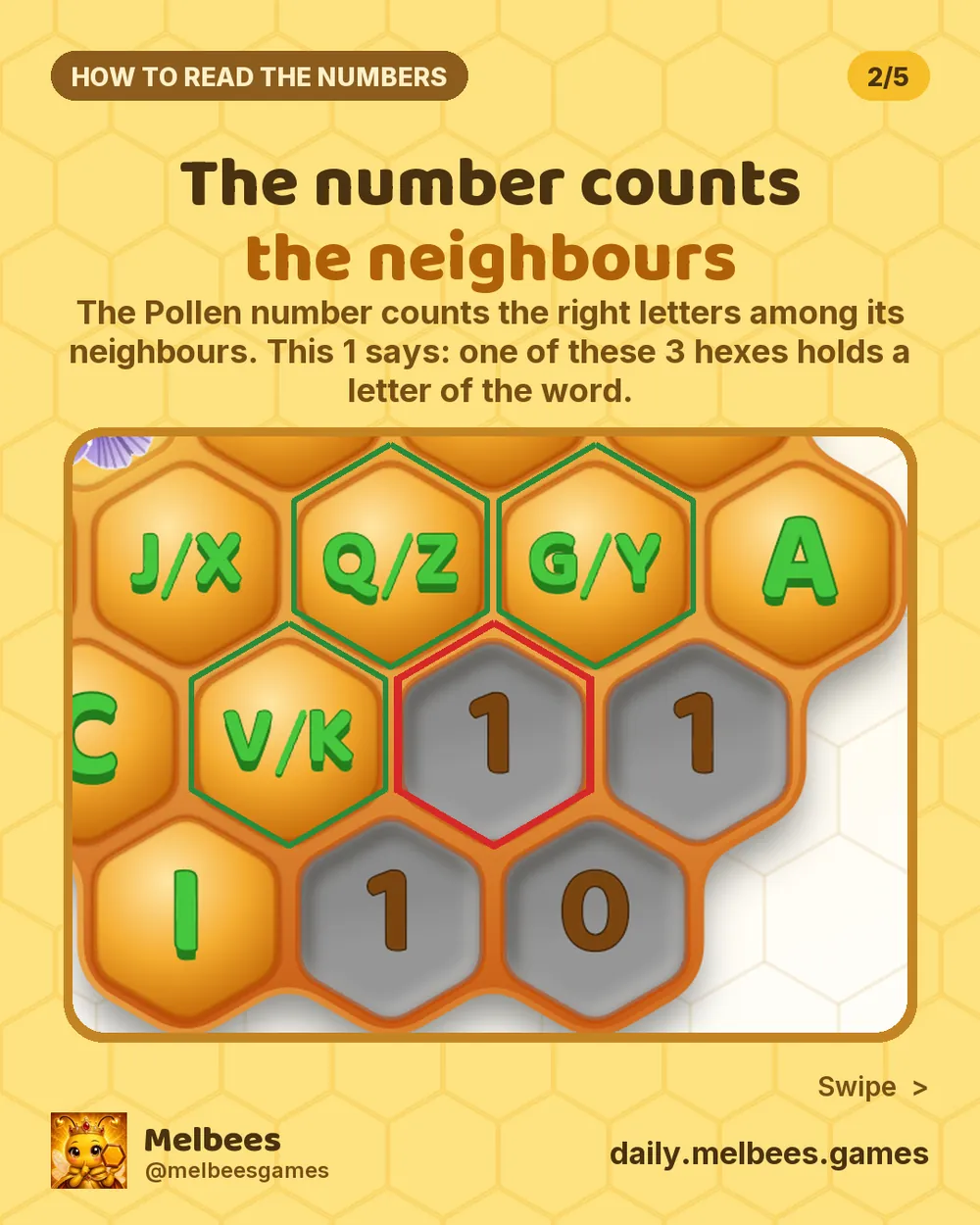
A Pollen number counts the right letters among the neighbours of its hex. If the number is 1, one of the hexes around it holds a letter that belongs to the word of the day. If it is 2, two of its neighbours hold right letters, and so on.
That gives you a golden rule: Pollen does not tell you which neighbour is the right one, only how many. On its own the clue does not solve anything, but combined with the numbers of other hexes it closes in on the answer. That is exactly the charm of Minesweeper, with letters in place of mines.
What about zero?
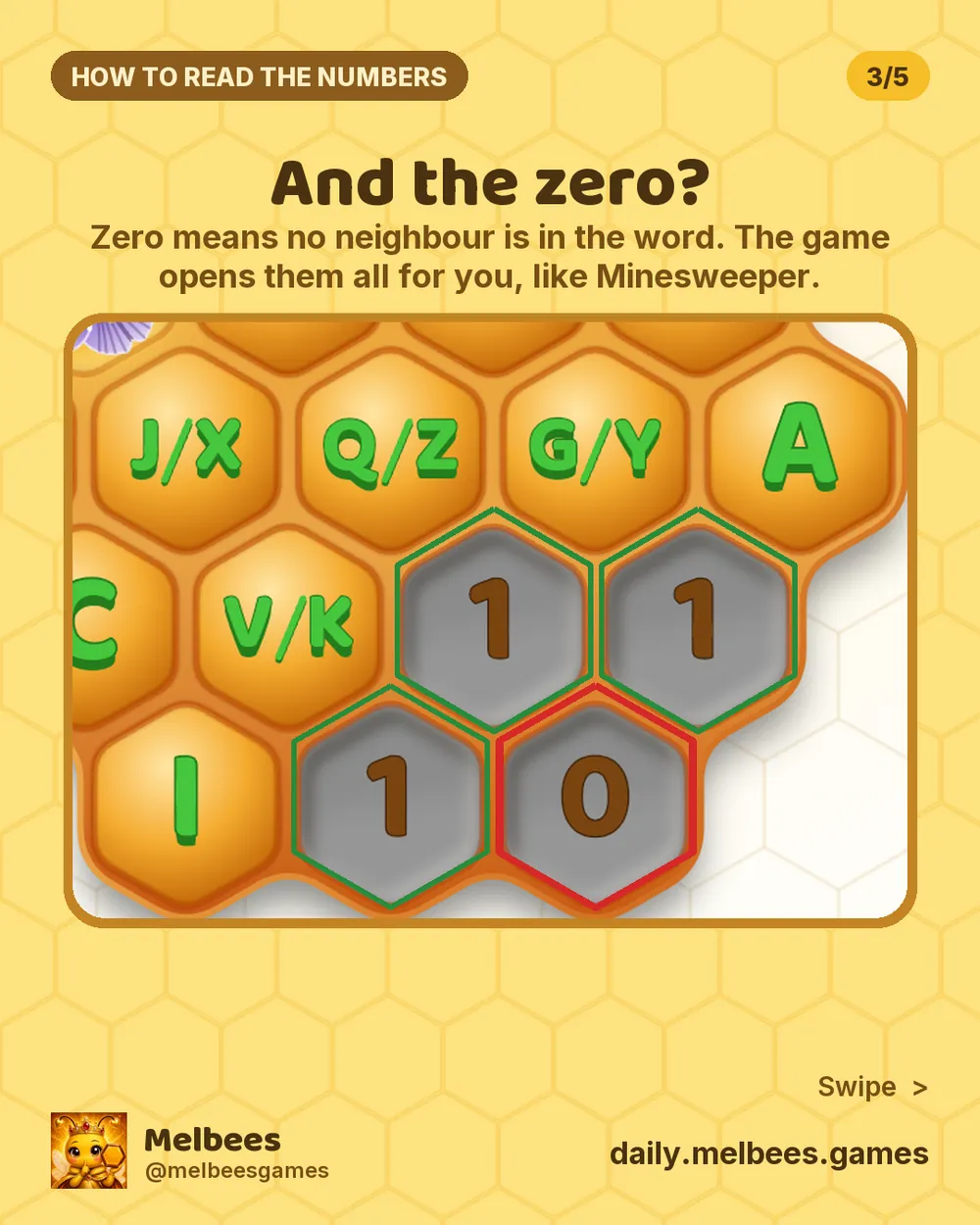
Zero is the most generous number. It means none of its neighbours is in the word. With nothing left to find around it, the game opens all those hexes for you, the same way Minesweeper clears empty areas. One zero often opens a clearing of new clues, which is why it is worth looking for one early.
Match or discard
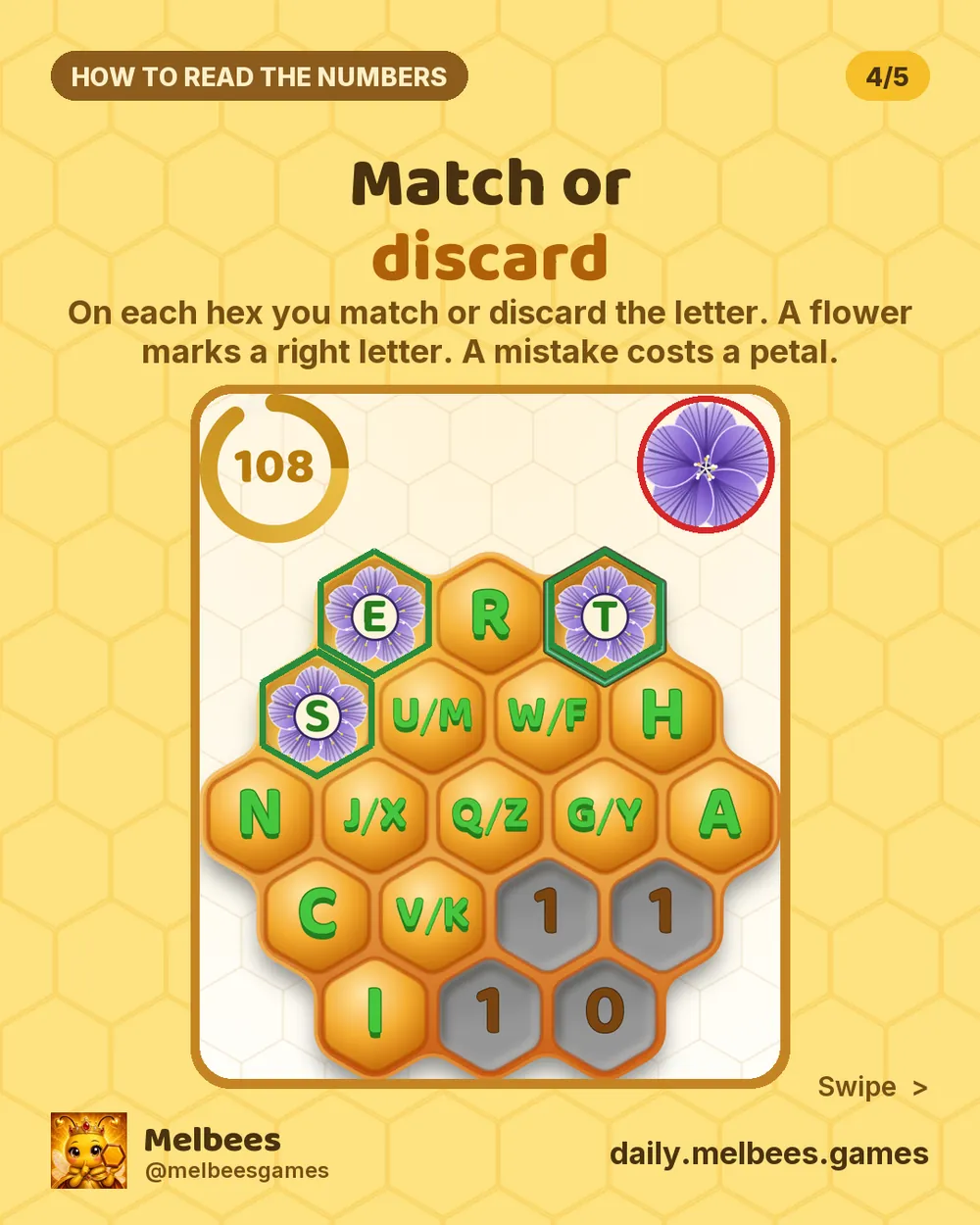
On each hex you decide: match the letter (bet that it is in the word) or discard it (conclude that it is not). When you are right, a flower marks the correct letter on the honeycomb. A wrong move costs a petal, and your petals are your margin for error in the round.
So reasoning beats speed: before you act, check what the neighbouring numbers allow you to conclude.
A logic exercise
Picture a hex showing Pollen 2 with four closed neighbours, called A, B, C and D. From other clues you already know that A and B hold letters of the word. What can you conclude about C and D?
Show the answer
Pollen 2 says there are exactly two right letters among the neighbours. A and B are already those two, so C and D do not hold letters of the word, and you can discard them safely.
Now the other way round: a Pollen 1 has three closed neighbours, X, Y and Z. You found that X is in the word. What about Y and Z?
Show the answer
The 1 is already "used up" by X. So Y and Z do not hold a letter of the word and can be discarded.
That kind of deduction, linking one number to another and removing what is left, is the base of every honeycomb. The more numbers you cross-check, the fewer bets you need, and the Daily becomes more of a reasoning puzzle than a game of luck.
Where to start
- Pick the Beginner level: one word and a small honeycomb, good for getting the hang of it.
- Look for a zero: it opens several hexes at once.
- Read the numbers together, never one at a time.
- Discard whatever one number has already ruled out.
The Melbees Daily Challenge is free in your browser at daily.melbees.games. There is a new round every day, and the rule is the one you just read.